

Eye care: Tips and recommendations
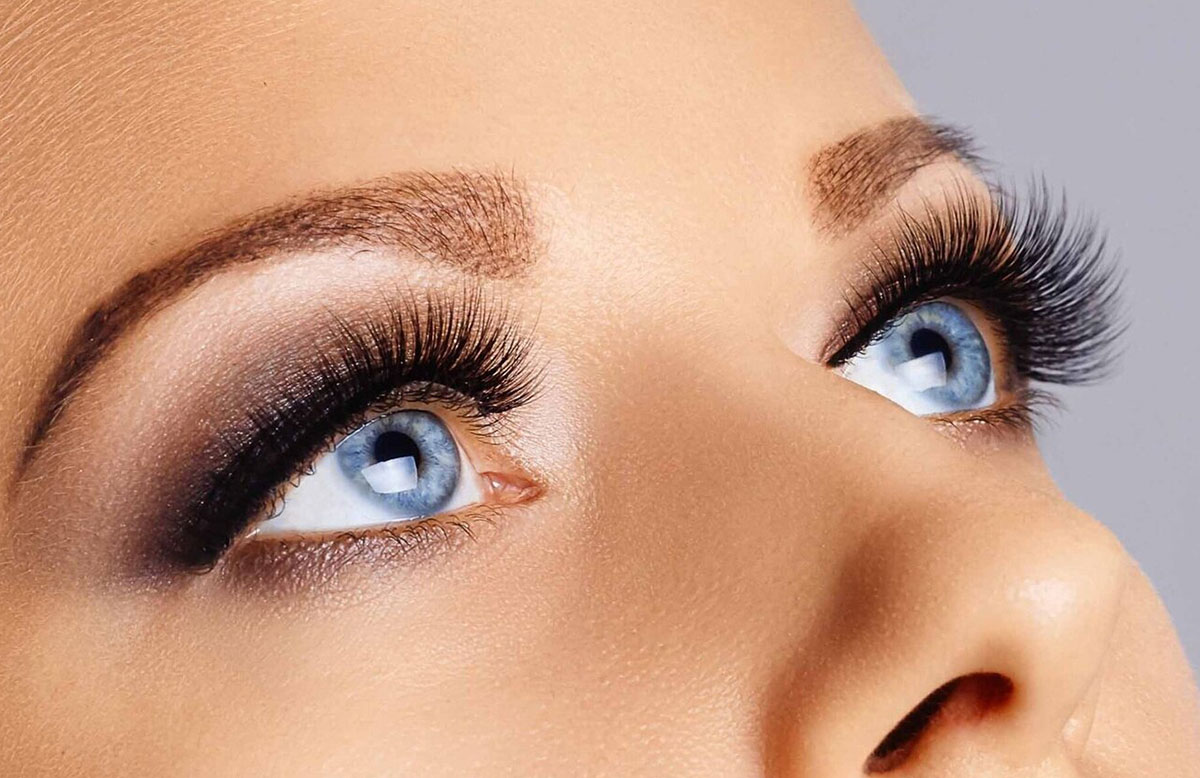
Although the eyes are one of the most important organs in our body, the fact is that many of us neglect caring for them. They attribute any deterioration of their eyesight to age, and only few realise that several eye diseases can be prevented, or their treatment significantly simplified.
In today's article you will read:
- which methods of prevention can help us keep our eyesight in excellent condition
- which risk factors are the most dangerous for our eyes
- whether eating carrots really helps good eyesight
- why any vision problems need to be addressed as soon as possible, and how
Healthy eyes in a healthy body
What applies to essentially any human organ also applies to the eyes. If we pay them enough attention, if we take proper care of our eyes, they will usually reward us for it. In this case, with good-quality vision and the elimination of eye diseases. On the other hand, there are also eye defects or diseases that we cannot avoid. Even in this case, however, it holds true that through our own approach we can significantly speed up their correction or treatment and make it more effective.
It is also true that if we take care of our health and of our body as a whole throughout our life, it will very likely also show in the health of our eyes. Because it is only rarely true that an unhealthy body has healthy eyes. And conversely, a person's overall health very often has a positive effect on the health of the eyes as well.
Not even an exemplary lifestyle will prevent presbyopia
To begin with, we decided to give an example of an eye defect against which not even an ideal lifestyle will protect us. It is completely natural, because our eyes also age and, in lay terms, wear out. Most of you would probably guess that such conditions come in old age (for example, age-related macular degeneration or cataract). But did you know that presbyopia – popularly known as age-related long-sightedness or short-arm syndrome – affects every person, as early as between the ages of 40 and 45?
It is an eye defect that manifests itself in our inability to focus on very close objects. In an effort to read a message on our mobile phone or a text in a magazine, we try to hold them as far away from our eyes as possible. This is caused by the worn human lens, which loses its elasticity with age.
The solution is reading glasses, which can correct this defect, but the only permanent and real solution to the problem is laser eye surgery, in which the damaged lens is replaced with a new artificial one. We recommend investing in one of the most modern methods, such as FEMTO Z-Prelex, which are painless, are performed on an outpatient basis under local anaesthesia, and are characterised by maximum safety with a minimal risk of undesirable postoperative complications.
Do not neglect preventive check-ups
You have probably heard many times in connection with health how important regular preventive check-ups are. In the case of eyesight, this applies doubly. They can reveal not only eye defects and diseases, but also some serious general diseases, for example HIV, tuberculosis or diabetes.
The importance of preventive eye examinations increases with age. You should not neglect them throughout your life, but especially after forty we recommend not skipping any of the scheduled examinations. It is precisely then that the risk of developing one of the eye diseases rises radically. And here too, the sooner the problem is diagnosed, the faster and more easily it can be resolved. Finally, it must be emphasised that a comprehensive eye examination can also discover an eye disease whose existence you may not even suspect. For example, glaucoma, which is the second most common cause of blindness in the world after cataract, can develop completely without symptoms, even for years. In this disease, mainly as a result of high intraocular pressure the optic nerve, which transmits information from the brain to the eye, is gradually damaged. Its severe damage can even lead to irreversible blindness.
Vitamins and minerals important for eyesight can be found in both readily available and exotic crops
Vitamins are important for the healthy development of the eyes and for keeping them in good condition. The most widespread vitamin deficiency in the world is that of vitamin A. It helps protect eyesight against night blindness and damage to the retina of the eye, but it is also very necessary, for example, for normal growth and development of the body, for healthy bones and teeth, and for ensuring proper immune and reproductive functions. Unlike most other vitamins, vitamin A is not found in vegetables and fruit, but only in foods of animal origin – for example in fish, milk or liver.
The truth, however, is that vitamin A can also be obtained indirectly by eating fruit and vegetables. Carrots, leafy vegetables, broccoli, beetroot, cherries and tomatoes contain beta-carotene, one molecule of which can be converted in the body into two molecules of vitamin A. The advantage of vitamin A obtained in this way is that you cannot overdose on it, because the body produces as much of it as it needs. In terms of eyesight, beta-carotene reduces the risk of cataract.
If you are asking whether our eyes need the best-known vitamin C, the answer is clear. Vitamin C is important too. It reduces the risk of cataract and age-related macular degeneration. Vitamin C is found in most fruit and vegetables; citrus fruits, blackcurrants, broccoli, kiwi, peppers and rose hips contain high amounts of it.
A lack of zinc can also contribute to the development of cataract or night blindness, and we should not forget to eat foods rich in vitamin E (found, for example, in almonds, sweet potatoes, spinach, peanuts and blueberries), which can eliminate free radicals that damage eye cells.
We have saved for last the carotenoids lutein and zeaxanthin. They are characterised by antioxidant effects and can filter high-energy blue light. They improve visual acuity and help prevent age-related eye diseases such as cataract or age-related macular degeneration.
While obtaining lutein poses no problem, as it is found in commonly available fruit and vegetables such as lettuce, cucumber, broccoli, spinach, kiwi, maize, oranges, pumpkin or mango, zeaxanthin occurs in larger amounts only in crops that are not grown in our latitudes. One example of many is goji, a crop popular especially in Chinese medicine.
A healthy lifestyle
It will probably not surprise anyone that a varied and balanced diet, sport and frequent time spent in nature, without smoking or excessive alcohol consumption, also have a beneficial effect on our eyes. Smoking or spending time in a smoky and dusty environment is a risk factor for several eye diseases. Long hours spent at the computer, and thus focusing on short distances without compensating by looking into the distance, for example while spending time in nature, contribute to the development of acquired short-sightedness and also of one of the newest diseases of civilisation – dry eye syndrome. Also try to avoid blue light for at least 2 hours before falling asleep and ensure 8 hours of good-quality sleep, during which your eyes will rest.
Do not worsen your eyesight by leaving it untreated
If your eyesight deteriorates, there is no need to panic. In the vast majority of cases, vision problems can be solved. If it is a refractive error, you can correct poor vision with glasses or contact lenses, or opt for a permanent solution, which is laser eye surgery, which you can now get with a special €1,000 discount as part of the ongoing promotion "We are not raising the price of eye surgery. We are lowering it for the first 1,000 of you". However, it is important that you start treating deteriorated eyesight as soon as possible. Therefore, if you notice some of the most common symptoms of deteriorated eyesight – blurred, unsharp, multiple or hazy vision, loss of spatial vision, increased sensitivity to light, worse vision at dusk or in the dark, but also frequent headaches and eye pain or more frequent tiredness, definitely do not postpone a visit to an ophthalmologist. The later you start treatment, the more you risk further deterioration of your eyesight.