
Cataract: Why should you not postpone surgery and risk losing your sight?
Cataract is a common eye disease that can lead to serious deterioration of vision. If left untreated, it can even cause permanent loss of sight. Postponing the procedure can have serious consequences, which is why it is important to act in time. At the iClinic eye clinic, we offer cataract surgery without waiting, without the need for hospitalisation and at an exceptional price.

What is cataract and how do you recognise it?
Cataract is a disease in which the lens of the eye becomes clouded, causing a gradual deterioration of vision. This process can develop slowly, which is why patients often do not notice it until their vision deteriorates to such a level that they begin to have problems with everyday activities such as reading or driving. Cataract most often appears in people over 60, but it is not unusual for 40-year-olds to suffer from it as well.The first symptoms may include blurred or double vision, difficulty focusing on details, increased sensitivity to light and problems with night vision. These symptoms may initially seem to be ordinary eye fatigue or a consequence of ageing, but it is important not to ignore them and not to hesitate to seek a specialist examination. The sooner cataract is diagnosed and treated, the greater the likelihood that more serious complications will be avoided and that the patient can enjoy clearer, better-quality vision. If you have any of these symptoms, do not hesitate to visit an ophthalmologist, because timely intervention is key.
How does cataract surgery work?
Cataract surgery is a commonly performed and quick outpatient procedure which is painless thanks to modern technologies. The procedure takes approximately 15 to 30 minutes and is performed under local anaesthesia, so the patient feels no pain. During the operation, the clouded lens is removed and replaced with an artificial lens. Patients usually recover quickly and can go home after only a short rest, which makes this procedure very comfortable and accessible to everyone. At the iClinic eye clinic, the procedure is performed on an outpatient basis, without the need for hospitalisation.
Types of implanted lenses
Before undergoing the procedure, the patient can choose from several types of lenses adapted to the individual needs of patients:- Monofocal lenses: These lenses are designed to improve vision at one specific distance, usually for distance. Patients who choose monofocal lenses may need glasses for reading or for near vision after surgery. These lenses are an excellent choice for those whose primary needs relate to distance vision, for example when driving or watching television.
- Multifocal lenses: The lenses are designed to provide sharp vision at several distances - near and far. Patients who use them can experience greater flexibility in everyday activities such as reading, working at a computer or driving, without the need to keep changing glasses. Multifocal lenses are a popular choice for patients who want to get rid of prescription glasses.
- Toric lenses: These lenses are specially designed to correct astigmatism, which causes blurred vision. Toric lenses help improve the sharpness of vision by correcting the curvature of the cornea. These lenses are suitable for patients who have astigmatism and want to achieve maximum quality of vision after surgery.
The examinations also include a consultation with an ophthalmologist, who will help patients choose the most suitable lens based on their personal needs and lifestyle.

Why should you undergo surgery as soon as possible?
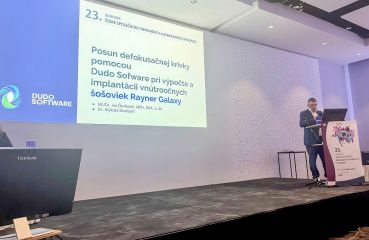
Timely cataract surgery can significantly improve your eyesight and quality of life. If you postpone the procedure, you risk further complications arising, which may be more difficult to treat. MUDr. Ivo Ďurkovič, MPH, emphasises: "Cataract surgery is one of the safest procedures in ophthalmology. Thanks to modern technologies, which we also use at iClinic, we can ensure a quick and trouble-free course of the procedure for patients, thereby giving them back clear and sharp vision."Moreover, at iClinic we offer surgery without waiting and without the need for hospitalisation, and at an exceptional price, which means that you can return to a full life as soon as possible.
Risks of postponing surgery
MUDr. Ivo Ďurkovič, MPH, warns of the danger that postponing cataract surgery brings: "Postponing cataract surgery can lead to irreversible damage to vision. The longer you wait, the more difficult the procedure is to perform, and serious loss of vision may occur." This process of deteriorating vision is not only about blurred vision. Gradually decreasing sharpness of vision can seriously affect everyday activities such as driving or walking. Impaired spatial orientation can lead to accidents and injuries, increasing the risk of harm.In addition, as time goes on, the cataract becomes more pronounced, which complicates the procedure itself. This means that postponing surgery can prolong the recovery time and worsen the overall quality of vision, creating a dangerous cycle that is difficult to escape. That is why it is important to act in time and not neglect the health of your eyes.